Precision PCB Heater
CompletedDesigned a PCB heater with thermistor feedback and PWM power control for controlled thermal environments.
Engineering the Physical Layer.
"The physical layer is unforgiving—it demands absolute truth."
I’m an electrical engineer working at the intersection of power electronics, embedded systems, and software. I’ve worked in and led small R&D teams, taking hardware from early requirements and system architecture through design, testing, and commissioning.
My experience includes electrical power systems for LEO satellites at Pixxel, battery management for ground-based energy storage, and grid-tied solar PV inverters at 10 kW and above. That work involves circuit and PCB design, firmware, prototype bring-up, and preparation for manufacture, alongside DFM/DFA, vendor coordination, and reliability analysis through FMECA, FMEA, and worst-case circuit analysis.
I also build the equipment and software needed to understand and verify those systems: electrical ground support equipment, hardware-in-the-loop setups, power loggers, and protection instrumentation. My desktop and embedded software work covers data acquisition, load analysis, billing, and engineering calculations. Alongside development, I’ve advised on spacecraft components and energy infrastructure, working with engineers, researchers, and vendors.
I want to keep doing hands-on engineering while taking products through the full development cycle and leading small R&D teams. I’m also interested in independent projects and collaborations with other engineers and researchers, particularly on hardware and tools that make engineering work easier to carry out, test, and understand.
Developing a pluggable camera hardware interface, with attention to high-speed signal integrity and system integration.
Developing a portable power supply with battery management, compact converters, and electrical protection.
Exploring line scanners and Magneto-Optic Kerr Effect (MOKE) instrumentation for measurement and sensing.
Developing KiCad tools for PCB design and review, including Quick PI, Quick SI and QuickTherm.
Developing a local PCB and assembly simulation workbench for geometry, study setup, analysis and results.
Engineering calculators for loop compensation, IPC trace width, and magnetic component parameters.
LAUNCH TOOLSDesigned a PCB heater with thermistor feedback and PWM power control for controlled thermal environments.

Ten-channel bidirectional DC power logger rated to 100 V, with an analog front end and STM32 USB interface. The project includes firmware, calibration, and a desktop app for plotting and comparing channels.

This work covers satellite power systems and the ground equipment used to test and support them.

Built a 100W linear power supply, a 100W two-quadrant power supply, and a 150W electronic load. Also worked on 10kW+ grid-integrated PV inverters and motor controllers.

Designed and deployed battery management systems (BMS) for ground energy storage.

Designed a Doubly Fed Induction Generator test bench through the PCB layout stage.

STM32-based data-acquisition prototype with analog inputs, sensing, GPIO, and PWM interfaces. The public repository documents the hardware; its firmware and host software are not included.

Three-phase inverter PCB tested at 500 W continuous power, with on-board output-filter and DC-link capacitor options.
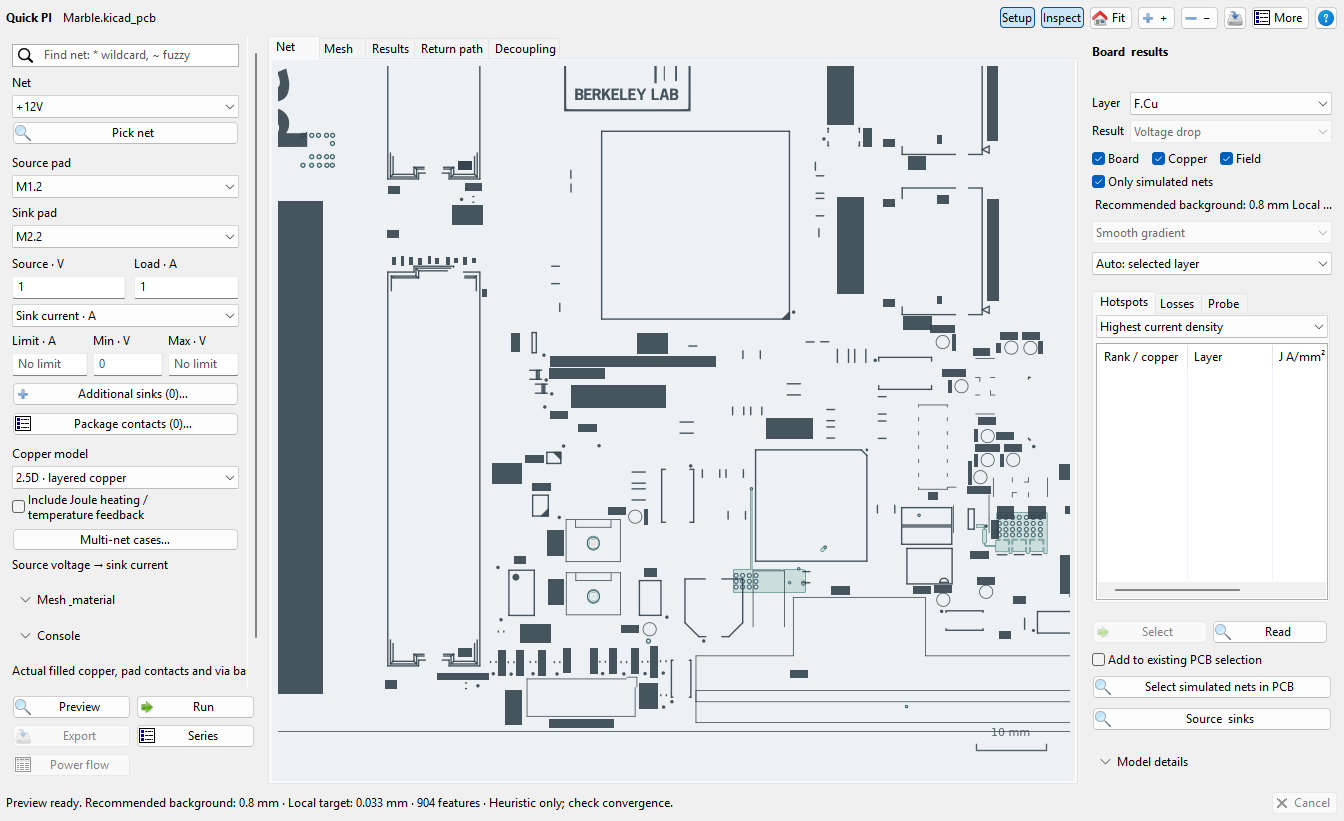
Independently installable KiCad tools for PCB design and review. Quick PI checks DC voltage drop, current density and copper losses; Quick SI screens routed signals and return paths; QuickTherm studies declared dissipation and board temperatures. The suite also includes fanout, via stitching, BOMs, assembly variants and manufacturing checks.
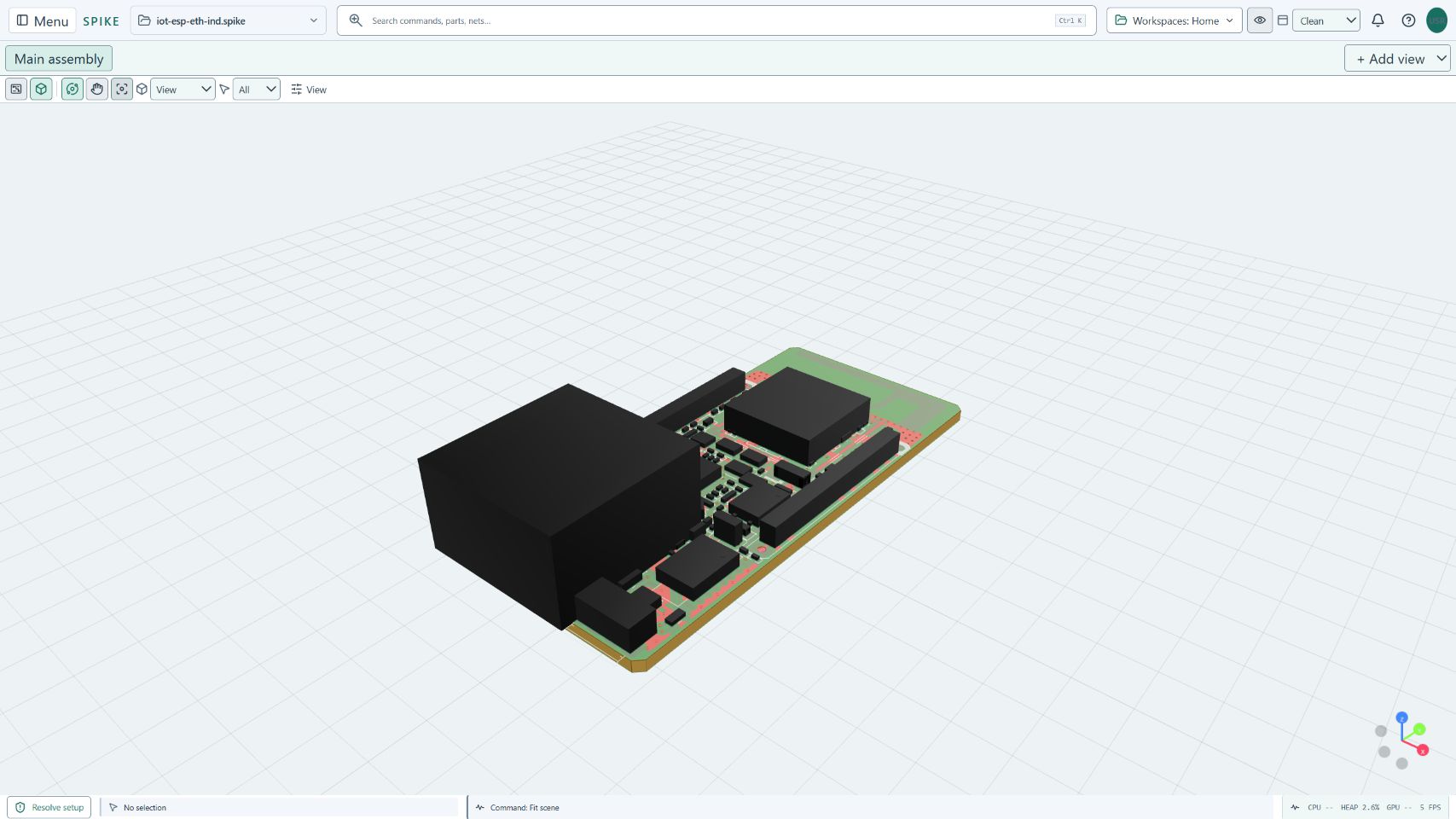
A local PCB and assembly simulation workbench bringing geometry, materials, study setup and results into one project. Supported workflows cover power and signal integrity, circuits, thermal studies and selected EM/RF and mechanical analyses, with 2D/3D inspection, reports and MCAD exchange. Model scope and external-engine requirements vary by workflow.
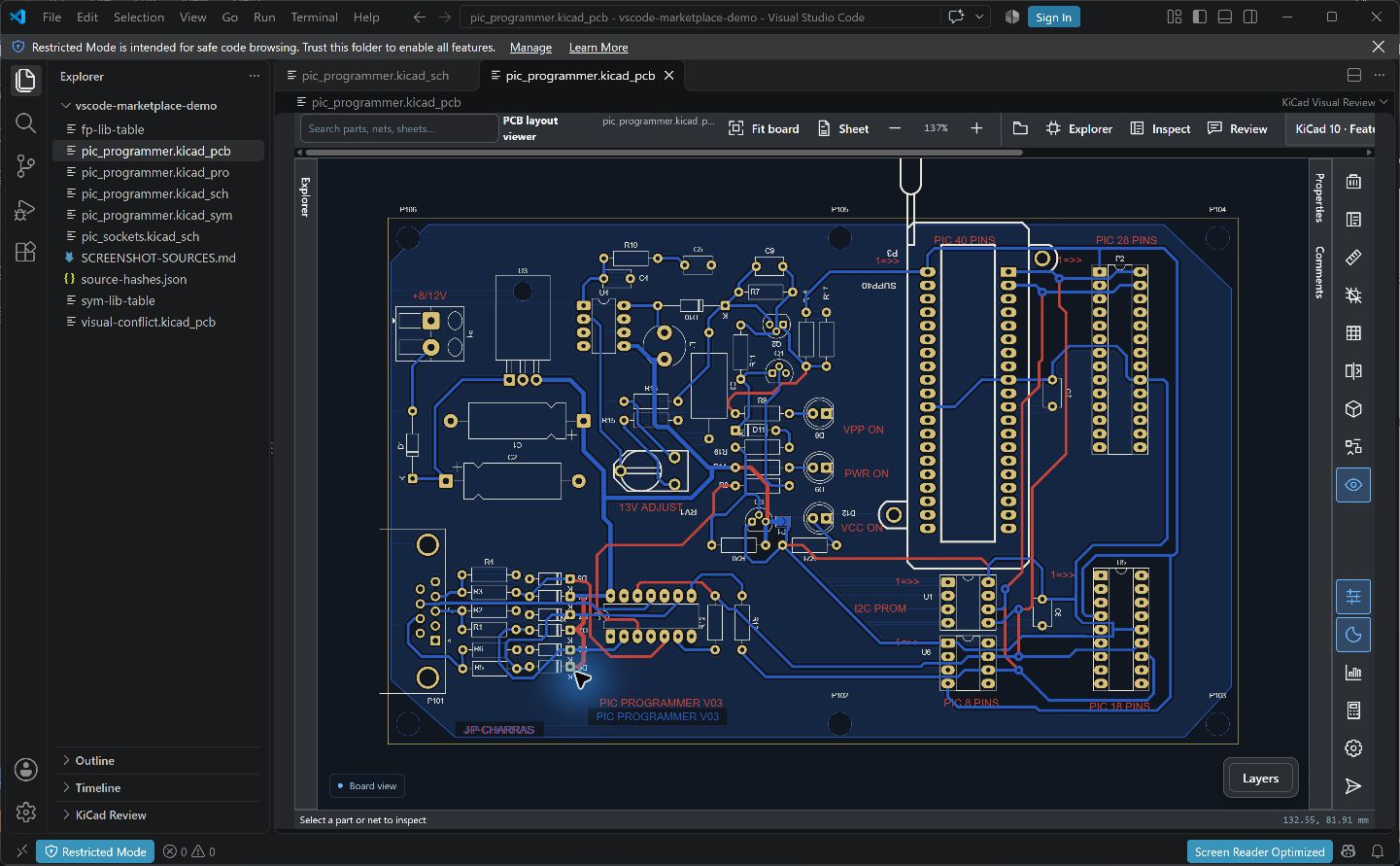
Review KiCad schematics and PCB layouts beside your code, with net and layer inspection, cross-probing, assembly data and visual revision comparisons. The Chromium companion brings supported review workflows to GitHub and GitLab pages and local projects.
Available on the VS Code Marketplace and Chrome Web Store.
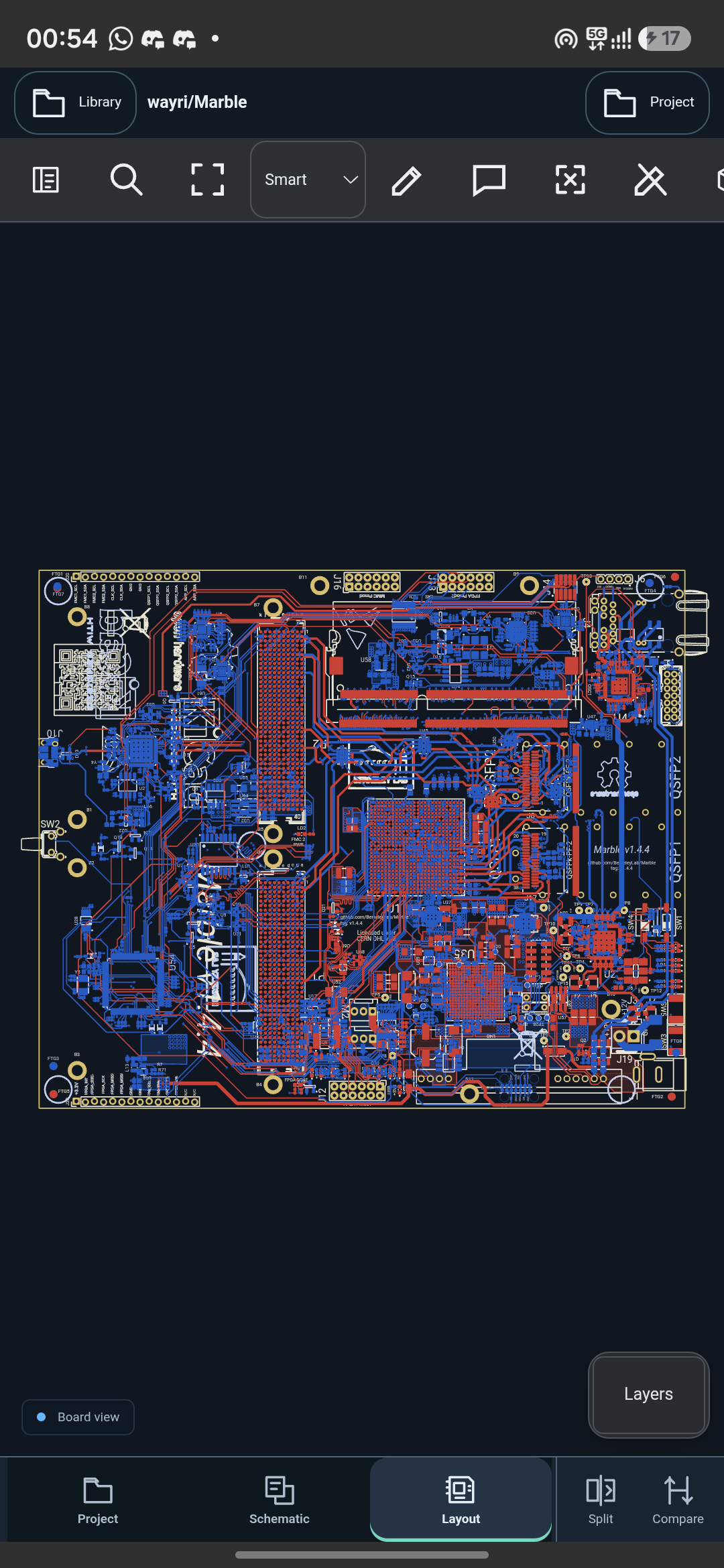
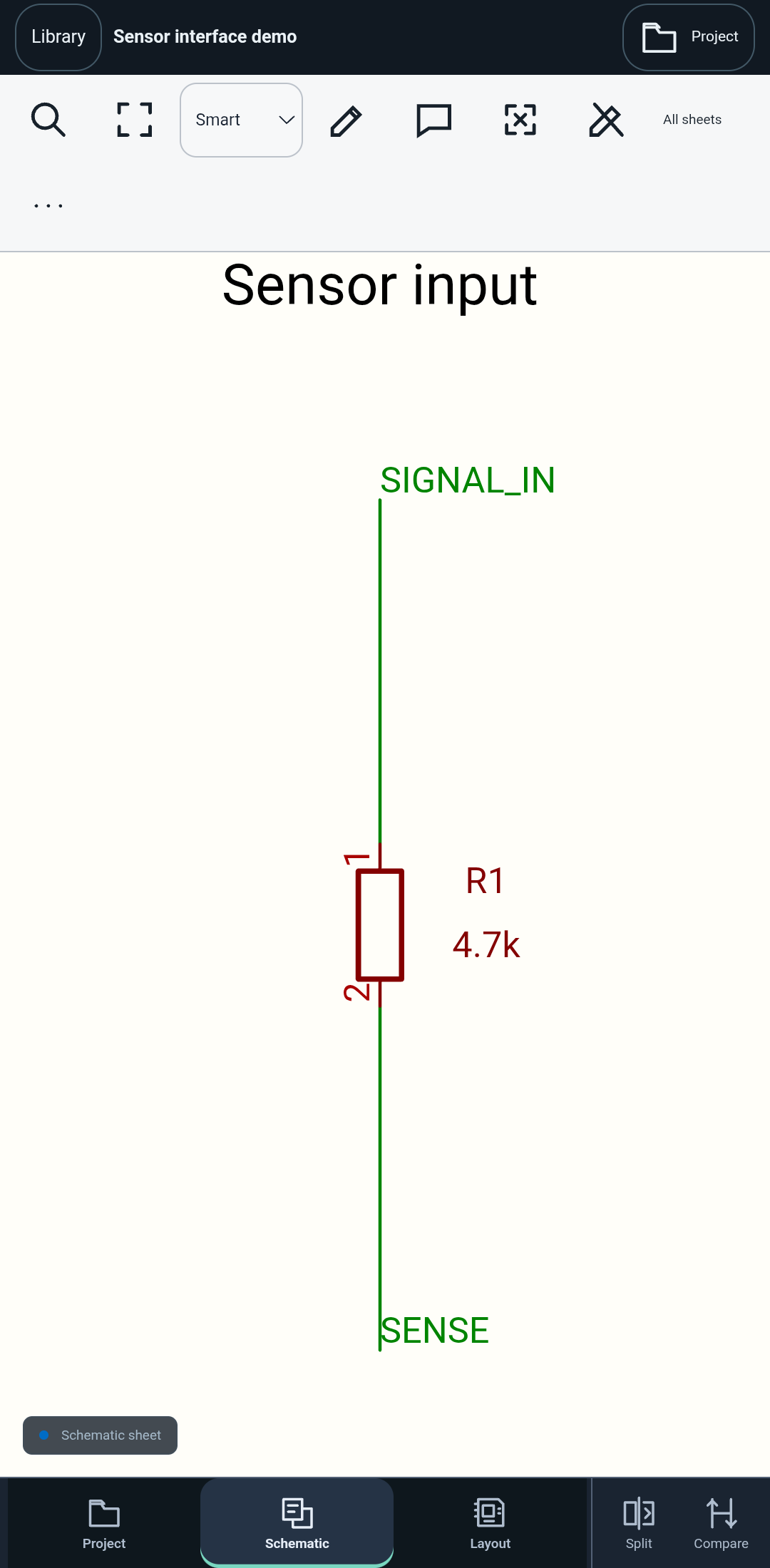
KiCad review tools for a phone or tablet, with companion workflows for documents, engineering calculators, imported BOM/iBOM data, saved simulation results and Gerber analysis. Available tools depend on the host and imported data.
Development preview; the APK and Android guide currently require repository access. Not yet available on Google Play.
Hardware test software using a PCAN interface to send commands, read responses, check results, and record them.
Developed desktop applications for electrical load profiles, billing, and data acquisition (DAQ).
Built software tools for transformer and inductor calculations and design.
C library of filters, signal checks, and PID control functions.
Consulted on spacecraft components, GNSS simulators, magnetic torque rods, and state-level energy infrastructure.
Familiar with Design for Manufacturing/Assembly (DFM/DFA), Test-jigs, Bed of Nails design, and cultivating long-term vendor relationships.
Work includes root cause analysis, fault analysis, hardware debugging, FMECA, FMEA, and WCCA.
Worked across product design, Design for Manufacturability (DFM), Design for Assembly (DFA), vendor coordination, and reliability analysis including FMECA, FMEA, and Worst-Case Circuit Analysis (WCCA). Advised on state-level infrastructure projects and coordinated small teams during design, testing, and commissioning of satellite systems and 10kW grid-tied inverters.
Designed satellite EPS subsystems and ground support equipment (EGSE). Other work includes ground energy storage BMS, 10kW grid-tied PV inverters, 100W linear and two-quadrant power supplies, 150W electronic loads, motor controllers, and DFIG test benches, along with near-field and thermal sensing tools.
Designed mixed-signal boards operating around 1GHz, including dense layouts with up to 16 layers.
Designed BLDC, induction, and DC motor controllers from 2W to 2kW. Wound transformers and inductors for designs below 300W.
Developed desktop applications for data acquisition (DAQ), electric load analysis, billing, transformer design, and HIL system control.
Built Hardware-in-the-Loop (HIL) setups including DACard-Basic. Validation work includes test jigs, Bed of Nails fixtures, logging, near-field and thermal sensing, and hardware debugging tools.
Working on EPS architecture for multiple satellites, ground support equipment, and test processes with other engineering teams.
Advised hardware startups on prototyping, production planning, component sourcing, and embedded systems integration.
Coordinated a small team developing a 10kW grid-tied inverter testbed. Built hardware and software for researchers to test power control algorithms, and contributed to a DFIG test setup.
Analyzed how EV infrastructure could affect the local distribution grid and prepared recommendations for the state electricity regulator.
WayriCAD, formerly KiWay, is my collection of KiCad plugins for PCB design, analysis, and project review. A growing part of that work is making electrical...
This article describes the architecture and layout choices for a three-phase inverter board tested at 500 W continuous power. The main design concerns include switching...
Specialization in Power Systems & Renewable Energy | Graduated with Grade A
Lovely Professional University (LPU) | 2022
Graduated with Grade A
University of Kashmir | 2019
ScienceDirect / Elsevier | 2023 | DOI: S2352152X23025987
IEEE Xplore | 2022 | Document: 9851081
Springer Link | 2023 | DOI: 10.1007/s12652-023-04578-w
Springer Book chapter | 2021 | DOI: 10.1007/978-981-16-1186-5_8
Outrun the backlog. Reach orbit. Bring the grid back into balance.
Reach 1,000 m to earn one orbital booster. The tasks will not follow you to space. Probably.
Centre a target, zoom to 3×, then hold still for a sharp picture.
This opens a fictional island-grid sandbox. Match supply to demand and keep the lights on.
Track the changing demand. Keep the mismatch within 9 MW for 32 balanced seconds to complete the loop.
Hold Eco or Boost; tap Jump. Click the canvas for keyboard controls. P pauses. Road, flight, photography and grid models use simplified arcade rules, not engineering predictions.
Click a photograph to save it. Images depict the fictional game world.
Change a load or its duty cycle. See what it costs in battery life.
Radio uses 41% of the average load power.
Average load = Σ(on-state power × duty cycle). Battery draw = average load ÷ converter efficiency. Runtime = usable battery energy ÷ battery draw. Peak load ceiling assumes every load with a nonzero duty cycle can turn on together; it is measured at the load, before converter losses.
The values are an editable example, not measurements from a project. This simple model assumes constant conversion efficiency and zero off-state power. Enter usable energy after any battery derating; standby draw, temperature effects, startup surges, and changes in efficiency need a more detailed budget.
I occasionally write about engineering challenges, side projects, and learnings.
I'm open to talking about systems architecture, hardware development, energy technology, research, and projects involving planes, trains, satellites, or robots. Or, just to have a chat.
You can reach out to me on linkedin or .